ARCHIVE |
|
|||
|
Spheres
of Influence Influences and letting them go Do you control your influences? How do you “do what you do?” Art School education is a good example of self-directed learning. Does it leave its mark long after you have left? Three women art teachers at my school were (Jan Hunt, Paula Sherrif and Gillian Norman) trained at the then art-teacher training college of Bath Academy of Art. Encouraged by them I applied for and was accepted to study at Bath Academy of Art, where I did Foundation and BA. "The pious and contradictory act of giving up illusionism and approaching the object" Robert Morris EMBRACING PROCESS-BASED ART Of course Matisse must have had a process when making his work, but what I came to understand at Bath Academy is what process does when it is the subject of the work. Lalic, at that time the Fine Art Fellow, with her salt-pan-like distillations of paint pools – drying horizontally and Crumplin with his arm and hand gestures frozen in plaster – both made non-picturing work, drawing upon Process. Colin's work developed into spreading oil paint on one half of the canvas's area and then folding the other side over creating chance marks without a brush. These marks would then be replicated by hand and brush on the other side of the painting, combining process with representation. (As opposed to Michael Craig-Martin a former BAA lecturer who made ‘picturing work' concerned with representation of recognisable everyday forms). They were a direct influence on me, together with the American Robert Morris. My
work was made flat on the studio floor, which was protected by a polythene
sheet. I painted the canvas after folding it into origami
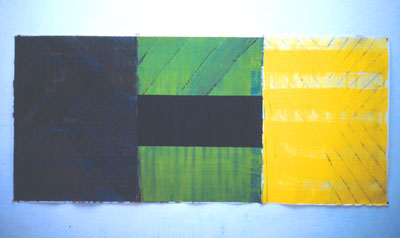
shapes. Blue flags. Crumplin invited the visiting lecturers – Alan Green – and his seeminly blank monochromatic canvases executed in meticulous detail, - attending to every nuance of surface texture and manual direction, brimming with content if you look carefully; Joel Fisher with his paper-making process leading to imaginative extrapolations from a single horse hair left on the paper by the drying blanket – a vast bank of potential, like his own cosmos in microcosm PICTURE. If painting had no preconcieved image to show then what was it going to show? Joel was inspirational, and his work opened the doors onto an art whose strict strategies permitted leaps of the imagination. Less definitely was more. "In 1913 Kasimir Malevich placed a black square on a white ground and called it “the void”. In 1914 Marcel Duchamp exhibited the metal bottle-rack, and for half a century these marked the limits of visual art; they were renunciations of former limits. Malevich renounced the notion that art had to be complex, and Duchamp showed that he could make an ‘art-work' just by choosing one ready made object from a host of others, so making it unique, like any other art object. Barbara Rose said that, “these works were a formal reaction to the excesses of painterliness. The simple denial of content can in itself constitute the content.” Were they negating all feelings, were they in denial, or by this act did they not show their true feelings about the world? Withdrawing all imagery offers up other possibilities. A reaction to the florid over sentimentalised versions of life, see the Victorians. See Dr Zhivago. The Russian Revolution. Now painting's role was non-illusionistic there was nothing to keep
it hanging on a wall, to be a window onto another world. His works and ideas have helped to delineate a variety of problems inherent in Minimal Sculpture: these are viewer participation, size, scale, surface and gestalt. The word Gestalt means, “a perceived organized whole that is more than the sum of its parts”; and it is this that has to be defined in minimalist work. Robert Morris' case against painting is merely this, “the primary problematic concerns with which advanced painting have been occupied for about half a century have been structural. The structural element has gradually been revealed to lie within the literal qualities of the support. It has been a long dialogue with a limit. Sculpture, never having been concerned with illusionism, could not possibly have based the efforts of 50 years on the pious and contradictory act of giving up illusionism and approaching the object.”" So to recap, Art Historically, I was studying Modernism from Henri Rousseau,
Kandinsky (Point and Line to Plane) , Gaugin, to Frank Stella and Henri
Micheau and the Tachists. (with a dash of Dada and Surrealism verging
on the Absurdist). I
had a very clear idea of the painting as an object, with a flat surface,
a non-illusionary space, but was looking very hard for an emotional hook
into the matter of finding my own way of working. I was trying to see
how to make paintings which did not go all the way to being sculptures
and found some help in the French "Support/Surface" group who
focused on deconstructing the stretcher. Richard
Smith had been doing this
since the 1970's.
I also made painting tools, to try to automate
the painting prcess.
This attempt to strip out the personal from the work was to try to make
it more accessible to the general viewer. There was a feeling that you
should think about the viewer. My process was like this: Choose a 2 dimensional space, say 4 ft by 4ft , and then place everything you have at hand into that space. Making decisions was easy when a process was stipulated. Working on the floor the work could grow to huge proportions, or become very long. PICTURE Nihilism, Samuel Beckett and Waiting for Godot? According to Wikipedia “ Nihilists generally assert some or all of the following: there is no reasonable proof of the existence of a higher ruler or creator, a "true morality" is unknown, and secular ethics are impossible; therefore, life has no truth, and no action is known to be preferable to any other.[1]” PICTURE OF IF YOU'RE NOT COMMITTED TO ANYTHING YOU'RE JUST TAKING UP SPACE. Another process was the "Mark and Cut Book" idea.
It came about soon after the unfortunate event of my mother succumbing
to what may one day be a curable desease, but then was not, cancer.
I was striving to present the other side of this life, however impossible
that may be. I left college and started a list of objects connected by 'Mystery and Ambiguity'. I started to use images, I photographed things that fulfilled the criteria of having an ambiguous form, or semi-form, or made me look twice because they were hard to classify. I had no studio as such to work in. I went to Japan to visit a brother, I went to the US, and did a bit of video at Syracuse University. It was a period of searching for something and trying new media. Documentary Evidence: The lists turned into a gathering of evidence.
Narrative strings emerged from the mass of collected stuff. I paid typsetters
to set it all in long galleys of text and b&w images. Extracting
summary phrases from the texts I made slide projection pieces which were
an end in themselves, using pure colour, light and brief narrative sequences.
They used aphorisms, short pithy statements which I had extracted from
my semi-fictional autobiographical alphabeticised text list, and had
the potential to rival advertising hordings in their scale. Art and Aphorisms - the search for a format I made slide pieces for projection, which had words on, and a simple yet ambiguous narrative string/thread open to interpretation. Our society is still full of contradictions and unfairness. It was at Goldsmiths that I witnessed this first hand. I rented a tiny SPACE studio in Hackney and tried to paint again,
the outcome was confusion and despair. I found Goldsmiths a challenging
battleground, all of us were seeking to reach some plateau of solid ground
but in the interim we were swimming about in a dialectical soup of ideologies.
At least I was, I took it all too earnestly. I was trying too hard. I
felt the goal posts had been moved, I may have moved them myself or it
could have been the overly theoretical way I went: and I was at a loss
as to how to make a living at being an artist. I moved from the Whitechapel
to a part time secretarial post at the Serpentine
Gallery.
Web links: Maria Lalic http://www.tate.org.uk/servlet/ArtistWorks?cgroupid=999999961&artistid=2639&page=1 Colin Crumplin http://collection.britishcouncil.org/html/artist/artist.aspx?id=18592 http://www.sixchapelrow.com/thumbs.php?artistid=91 Alan Green Joel Fisher Michael Kidner http://www.tate.org.uk/servlet/ArtistWorks?cgroupid=999999961&artistid=1405&page=1 Peter Kinley http://www.tate.org.uk/servlet/ArtistWorks?cgroupid=999999961&artistid=1413 Michael Craig-Martin Gerard McCarthy Mary Kelly http://www.rosamundfelsen.com/kelly/index.html# http://renaissancesociety.org/site/Exhibitions/Images.95.0.0.0.0.html?RENSOC_SESSID=bc9928be62f576b4627273eab521ff29&image=3120 Susan Hiller Barbara Kruger http://www.barbarakruger.com/art.shtml http://www.eng.fju.edu.tw/Literary_Criticism/feminism/kruger/kruger.htm http://en.wikipedia.org/wiki/Barbara_Kruger Jenny Holzer http://en.wikipedia.org/wiki/Jenny_Holzer http://adaweb.walkerart.org/project/holzer/cgi/pcb.cgi?change Paula Rego http://www.tate.org.uk/servlet/ArtistWorks?cgroupid=999999961&artistid=1823 Mikey Cuddihy Tony Bevan/Glynis Johnson Imants Tillers http://nga.gov.au/Exhibition/TILLERS/Default.cfm http://www.peeruk.org/html/projects/cuddihy1.html http://www.peeruk.org/html/projects/cuddihy2.html Genesis P-orridge http://www.youtube.com/watch?v=J7kauOh15jg&mode=related&search = Avis Newman http://renaissancesociety.org/site/Exhibitions/Images.108.0.0.0.0.html?image=2779David Maclagan http://www.jkp.com/catalogue/book.php/isbn/9781853028342 http://www.waterman.co.uk/pages/thumbnails/68.html John Furnival http://collection.britishcouncil.org/html/work/work.aspx?a=1&id=42751§ion=/artist/ Graham Day http://www.manningcamerata.com/gd-bio.htm http://www.baacorsham.co.uk/whosartnow8.htm Nicholas Gammon http://www.nickgammon.com/index%20resources/grnroomcat.pdf --------------------------------------------------------- Julian Schnabel Sigmar Polke http://www.artseensoho.com/Art/PACE/schnabel99/schnabel3.html (Mark Wallinger) http://www.chilternsculpturetrail.co.uk/2.html Kate Love http://courses.csm.arts.ac.uk/displaycourse.asp?CI=66&MA=2&CT=6&fc=10 Vivian BlackettSusan Trangmar http://www.icfar.co.uk/artists/trangmarsusan http://www.waddingtongalleries.com/artists/heron/works/1/B35418/ David HockneyPicasso Raoul Duffy Cezanne Vuillard Piero della Francesca Mantegna Fra Angelico Holbein Dubuffet Jasper Johns Robert Rauchenberg Andy Warhol Robert Morris Brice Marden http://www.spiked-online.com/Articles/00000006DE7A.htm http://videopool.typepad.com/articles_international_me/ Leave them with questions, not answers. |
|||
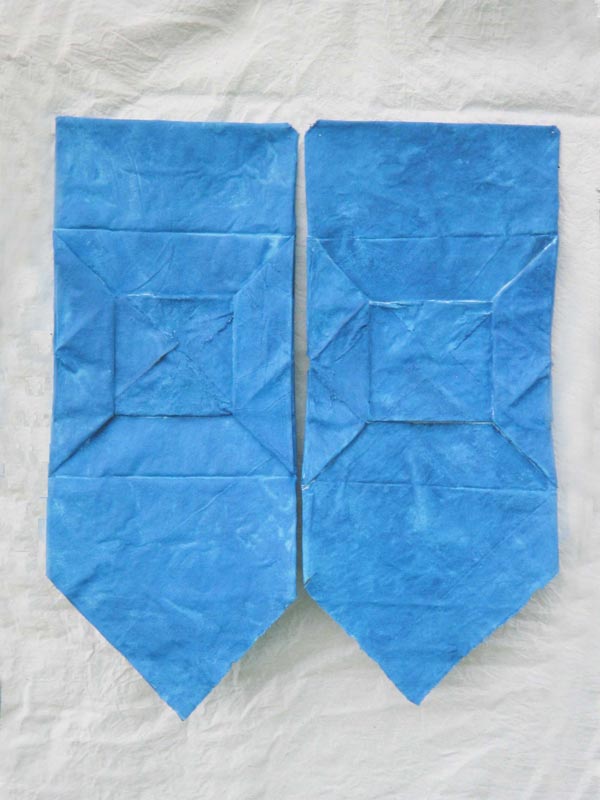 Jane Ostler: Ori1 1980 |
||||
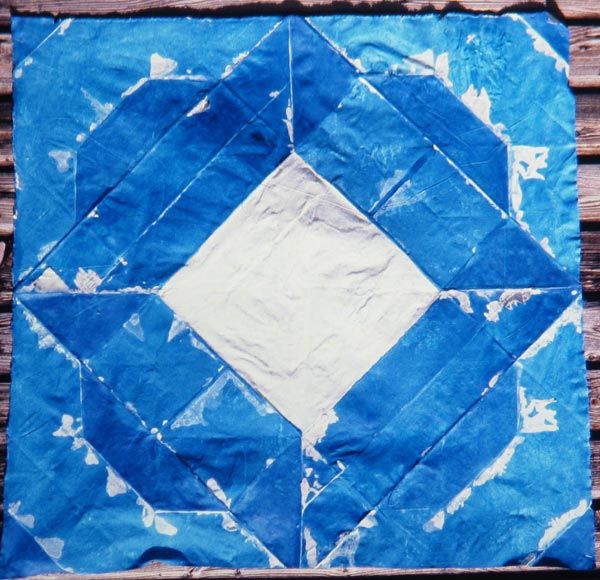 Jane Ostler: Ori1 1980 |
||||
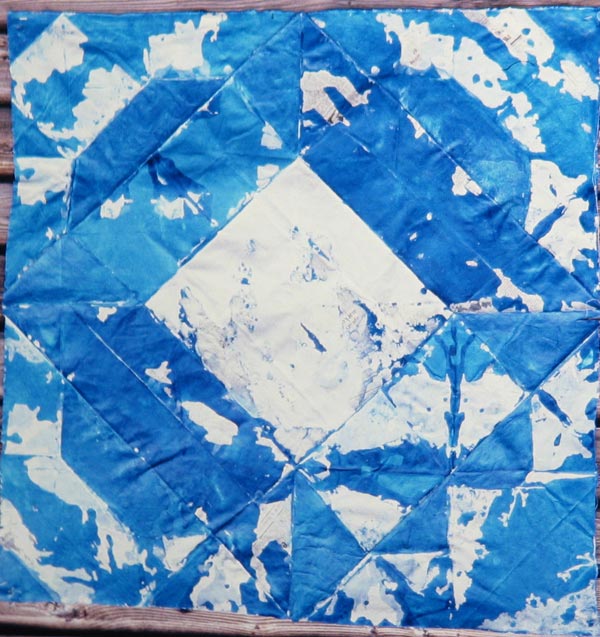 Jane Ostler: Ori2 1980 |
||||
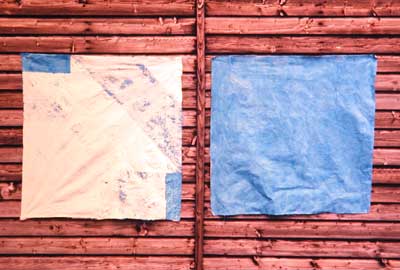 Jane Ostler: Blue flags 1980 |
||||
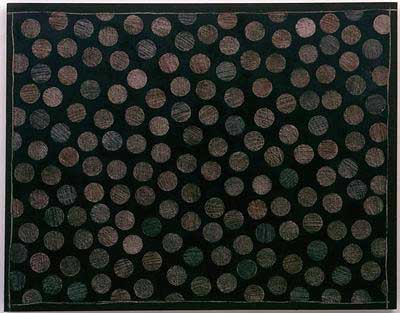 Alan Green: Venetian to Viridian 2002 |
||||
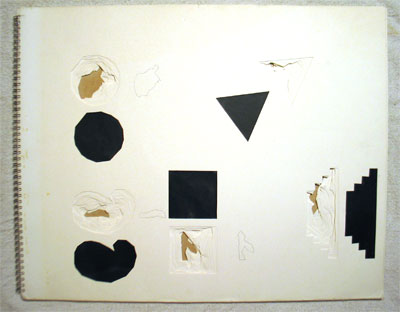 Jane Ostler: Cut and mark book 1979 |
||||
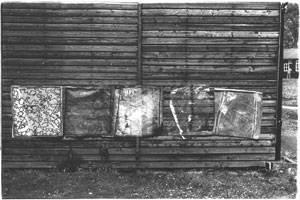 Jane Ostler: Blue Beechfield 1980 |
||||
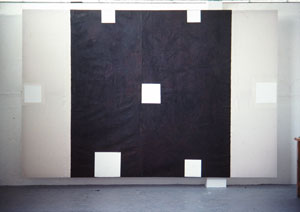 Jane Ostler: 7 Squares 1980 |
||||
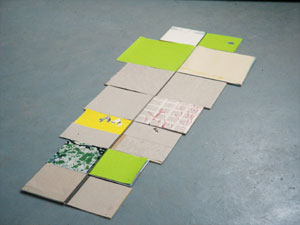 Jane Ostler: 7 books 1980 |
||||
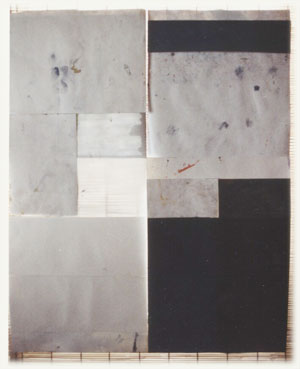 Jane Ostler: Japanese Drawing 1981 |
||||
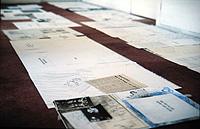 Jane Ostler: Documentary evidence |
||||
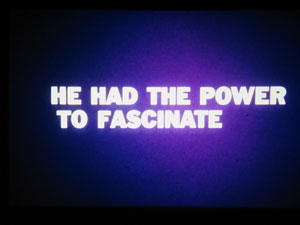 Jane Ostler: Slide piece |
||||
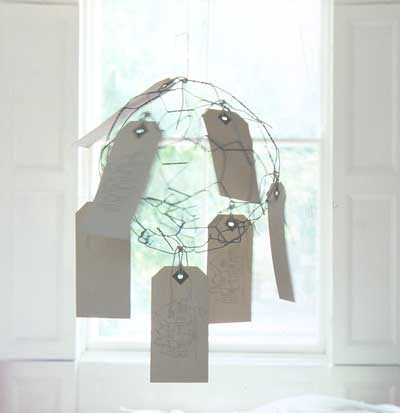 Jane Ostler: World view |
||||
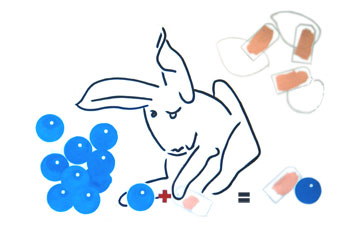 Jane Ostler: Another One (GH) |
||||
 Gesture & Geometry. Domestic Geometry |
||||
|
||||
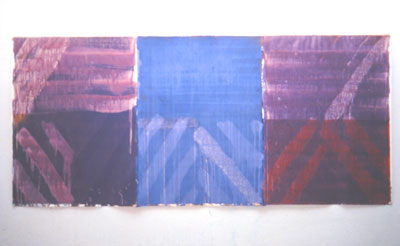 Soft textured watercolour in violet, periwinkle, rust Soft textured watercolour in violet, periwinkle, rust |
||||
|
||||
Superfine casting plaster, silicone mould, small teddy, small child |
||||
Superfine casting plaster, silicone moulds |
||||
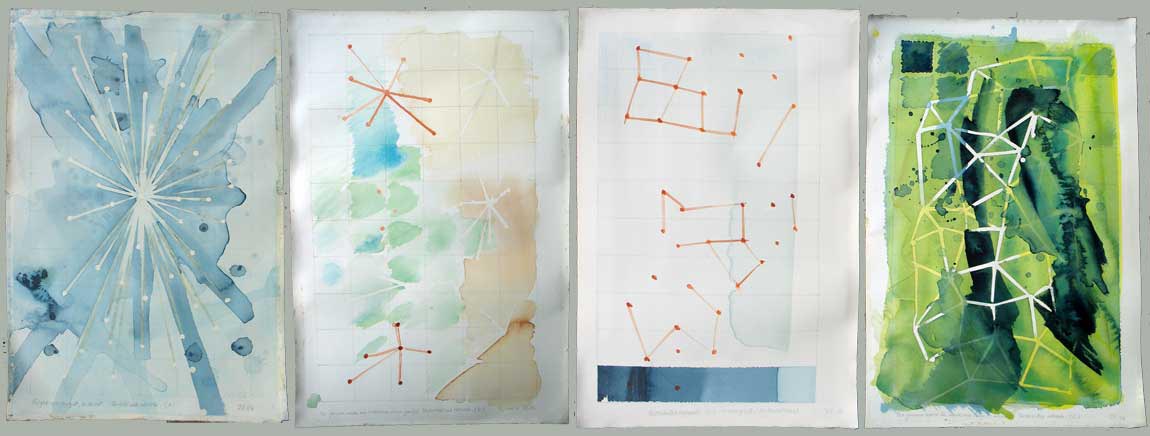 Jane Ostler: Network series. Watercolour on paper, rubber masking fluid Jane Ostler: Network series. Watercolour on paper, rubber masking fluid |
||||